
Your golf clubs don’t have to spend the winter in storage when a basement, garage or spare room could give you somewhere to keep swinging. Whether you want a hitting cage for regular practice or a home simulator for rounds with friends, here’s what to consider before choosing the netting, hitting surface and equipment to bring it together.
Your Golf Season Doesn’t Have to End at the Back Door
The clubs are put away, the course is closed, and you’re already wondering how much of your swing you’ll have to find again in the spring. Meanwhile, there’s a section of the basement, garage or workshop that might be doing little more than collecting boxes.
An indoor golf cage or home golf simulator can put that space to better use, giving you somewhere to practise through the winter, hit a few balls after work or invite friends over for a round without checking the forecast. The trick is choosing a setup that suits your home and the way you want to play, which starts well before you pick out a screen.
A golf cage or a simulator? Start with what you want to do.
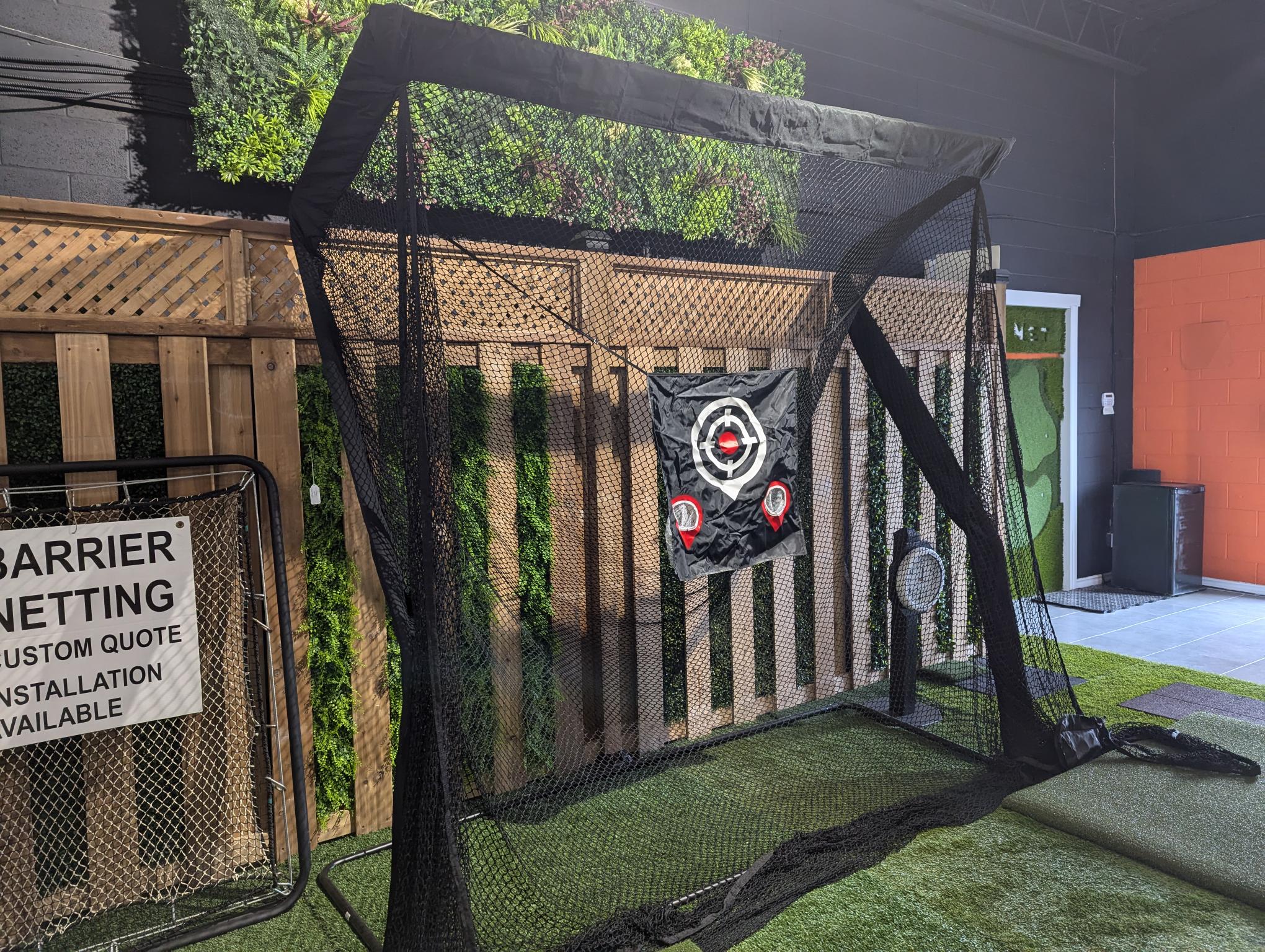
If your main goal is to swing regularly and practise making solid contact, an indoor golf cage with suitable impact netting and a quality hitting mat may give you what you need. You have a dedicated place to hit balls, with containment designed around the hitting area, without having to build a complete entertainment room.
A simulator adds another layer. A compatible launch monitor captures shot information, while software lets you practise on a virtual range or play simulated courses. Depending on the system, you can review measurements such as ball speed, launch angle and carry distance, giving you more information than the feel of the shot alone.
A projected course image adds to the experience, although some practice setups use a net with shot results displayed on a separate monitor. That makes it worth deciding how you’ll use the space before assuming you need every component of a full simulator room.
For some homeowners, the priority is twenty minutes of practice whenever they have time. For others, it’s a Saturday afternoon round with friends while the snow piles up outside. Both are good reasons to bring golf home, but they can lead to different equipment choices.
Measure the swing, not just the room.
An empty room can look large enough for indoor golf until you bring a driver into it.
Ceiling height is only part of the equation. You also need room through the backswing and follow-through, space for the enclosure, and the distances required by your chosen launch monitor and screen system. A beam, garage door track, light fixture or low section of ductwork can affect where the hitting area goes, even when the rest of the room appears suitable.
There is no single room measurement that works for every golfer and every system. Your height, swing, club selection and equipment all matter, and a setup that accommodates one right-handed golfer may need a different layout when a left-handed family member wants to join in.
Before purchasing, measure the usable width, depth and height, including the lowest obstruction, then have those measurements assessed against the proposed equipment. Allow for the height of the hitting mat as well, because your swing starts from that surface.
You want to swing comfortably, without spending every shot wondering whether your club will reach the ceiling.
Plan for the shot you didn’t mean to hit.
Nobody plans to shank a ball into the garage wall, but an indoor golf setup needs to account for more than your best shots.
The netting or enclosure should be suitable for golf ball impact, with side and overhead containment considered as part of the design. Exposed framing, nearby windows, openings and hard surfaces also need attention, along with the required clearance behind the net or impact screen.
A projection screen and a golf impact screen serve different purposes, so an ordinary screen should never be assumed suitable for stopping golf balls. Installation, tension and spacing should follow the requirements of the actual product being used.
Containment belongs in the original plan, along with the hitting position and room layout. It is much easier to address those details before the equipment is installed.
Give the hitting mat some attention.
The screen tends to get the attention, but the hitting mat is where you’ll stand and strike the ball every time you use the setup.
Choose a mat intended for golf practice, with a stable base and a hitting surface suited to your expected use. Consider whether it accepts tees, whether the hitting section can be replaced, and how it works with the surrounding floor and launch monitor.
Decorative artificial turf can help finish the room, but it serves a different purpose from a surface designed for repeated club impact. Planning both together can give you a finished space with a practical hitting area.
If you’re weighing where to spend your budget, the mat deserves more consideration than being whatever is left after buying the electronics.
Remember that the rest of the house will hear it.
Hitting a real golf ball indoors makes noise, both at the clubface and when the ball reaches the net or screen. That matters when the proposed golf room is below a bedroom, beside your home office or attached to a shared wall.
Think about when you expect to play and who else will be home. A garage may offer separation from the living area, but it brings other questions, including winter temperature, moisture, electrical access and where everything goes when the car comes back inside.
A shared space can still be an option, provided the setup and storage requirements are worked out before ordering. Include a clear area for anyone watching, outside the golfer’s swing and the ball’s path.
Budget for a working setup.
A home golf budget can include the cage or enclosure, impact netting or screen, hitting mat, flooring, launch monitor, computer, projector, mounting hardware and installation. Software subscriptions or course packages may add ongoing costs, depending on the system.
You may not need all of those components immediately, but you do need to know which ones are required for the experience you want.
If your plan is to start with a hitting cage and add simulator technology later, say so at the beginning. The enclosure dimensions, hitting position and available tracking space should be considered with that future addition in mind, helping you avoid buying components twice.
Put your space to work before spring arrives.
The best home golf setup is one you’ll use, whether that means a straightforward practice cage or a dedicated simulator room where friends regularly gather for a round.
Start with your space, your goals and a realistic budget, then choose the components that work together. You’ll have a much clearer idea of what is possible, what needs adjusting and where your money will make the most difference.
Let’s See What Fits Your Home
Thinking about an indoor golf cage or simulator? Bring Turf Net Sports Supplies your room measurements, a few photos and an idea of how you want to use the space. We can help you explore golf cages, netting, hitting surfaces and simulator components for your home.
Call 905-892-8787 or 1-877-617-8787, to start planning.
Where the grass is always green and your experience above par.
Your golf clubs don’t have to spend the winter in storage when a basement, garage or spare room could give you somewhere to keep swinging. Whether you want a hitting cage for regular practice or a home simulator for rounds with friends, here’s what to consider before choosing the netting, hitting surface and equipment to bring it together.
Your Golf Season Doesn’t Have to End at the Back Door
The clubs are put away, the course is closed, and you’re already wondering how much of your swing you’ll have to find again in the spring. Meanwhile, there’s a section of the basement, garage or workshop that might be doing little more than collecting boxes.
An indoor golf cage or home golf simulator can put that space to better use, giving you somewhere to practise through the winter, hit a few balls after work or invite friends over for a round without checking the forecast. The trick is choosing a setup that suits your home and the way you want to play, which starts well before you pick out a screen.
A golf cage or a simulator? Start with what you want to do.
If your main goal is to swing regularly and practise making solid contact, an indoor golf cage with suitable impact netting and a quality hitting mat may give you what you need. You have a dedicated place to hit balls, with containment designed around the hitting area, without having to build a complete entertainment room.
A simulator adds another layer. A compatible launch monitor captures shot information, while software lets you practise on a virtual range or play simulated courses. Depending on the system, you can review measurements such as ball speed, launch angle and carry distance, giving you more information than the feel of the shot alone.
A projected course image adds to the experience, although some practice setups use a net with shot results displayed on a separate monitor. That makes it worth deciding how you’ll use the space before assuming you need every component of a full simulator room.
For some homeowners, the priority is twenty minutes of practice whenever they have time. For others, it’s a Saturday afternoon round with friends while the snow piles up outside. Both are good reasons to bring golf home, but they can lead to different equipment choices.
Measure the swing, not just the room.
An empty room can look large enough for indoor golf until you bring a driver into it.
Ceiling height is only part of the equation. You also need room through the backswing and follow-through, space for the enclosure, and the distances required by your chosen launch monitor and screen system. A beam, garage door track, light fixture or low section of ductwork can affect where the hitting area goes, even when the rest of the room appears suitable.
There is no single room measurement that works for every golfer and every system. Your height, swing, club selection and equipment all matter, and a setup that accommodates one right-handed golfer may need a different layout when a left-handed family member wants to join in.
Before purchasing, measure the usable width, depth and height, including the lowest obstruction, then have those measurements assessed against the proposed equipment. Allow for the height of the hitting mat as well, because your swing starts from that surface.
You want to swing comfortably, without spending every shot wondering whether your club will reach the ceiling.
Plan for the shot you didn’t mean to hit.
Nobody plans to shank a ball into the garage wall, but an indoor golf setup needs to account for more than your best shots.
The netting or enclosure should be suitable for golf ball impact, with side and overhead containment considered as part of the design. Exposed framing, nearby windows, openings and hard surfaces also need attention, along with the required clearance behind the net or impact screen.
A projection screen and a golf impact screen serve different purposes, so an ordinary screen should never be assumed suitable for stopping golf balls. Installation, tension and spacing should follow the requirements of the actual product being used.
Containment belongs in the original plan, along with the hitting position and room layout. It is much easier to address those details before the equipment is installed.
Give the hitting mat some attention.
The screen tends to get the attention, but the hitting mat is where you’ll stand and strike the ball every time you use the setup.
Choose a mat intended for golf practice, with a stable base and a hitting surface suited to your expected use. Consider whether it accepts tees, whether the hitting section can be replaced, and how it works with the surrounding floor and launch monitor.
Decorative artificial turf can help finish the room, but it serves a different purpose from a surface designed for repeated club impact. Planning both together can give you a finished space with a practical hitting area.
If you’re weighing where to spend your budget, the mat deserves more consideration than being whatever is left after buying the electronics.
Remember that the rest of the house will hear it.
Hitting a real golf ball indoors makes noise, both at the clubface and when the ball reaches the net or screen. That matters when the proposed golf room is below a bedroom, beside your home office or attached to a shared wall.
Think about when you expect to play and who else will be home. A garage may offer separation from the living area, but it brings other questions, including winter temperature, moisture, electrical access and where everything goes when the car comes back inside.
A shared space can still be an option, provided the setup and storage requirements are worked out before ordering. Include a clear area for anyone watching, outside the golfer’s swing and the ball’s path.
Budget for a working setup.
A home golf budget can include the cage or enclosure, impact netting or screen, hitting mat, flooring, launch monitor, computer, projector, mounting hardware and installation. Software subscriptions or course packages may add ongoing costs, depending on the system.
You may not need all of those components immediately, but you do need to know which ones are required for the experience you want.
If your plan is to start with a hitting cage and add simulator technology later, say so at the beginning. The enclosure dimensions, hitting position and available tracking space should be considered with that future addition in mind, helping you avoid buying components twice.
Put your space to work before spring arrives.
The best home golf setup is one you’ll use, whether that means a straightforward practice cage or a dedicated simulator room where friends regularly gather for a round.
Start with your space, your goals and a realistic budget, then choose the components that work together. You’ll have a much clearer idea of what is possible, what needs adjusting and where your money will make the most difference.
Let’s See What Fits Your Home
Thinking about an indoor golf cage or simulator? Bring Turf Net Sports Supplies your room measurements, a few photos and an idea of how you want to use the space. We can help you explore golf cages, netting, hitting surfaces and simulator components for your home.
Call 905-892-8787 or 1-877-617-8787, to start planning.
Where the grass is always green and your experience above par.
